
AnimalHealthTrace by OmniTrace
National Digital Infrastructure for Animal Disease Surveillance, Response and Control
From early detection and laboratory confirmation to execution of measures, compensation and national reporting — in one secure, fully traceable digital process.
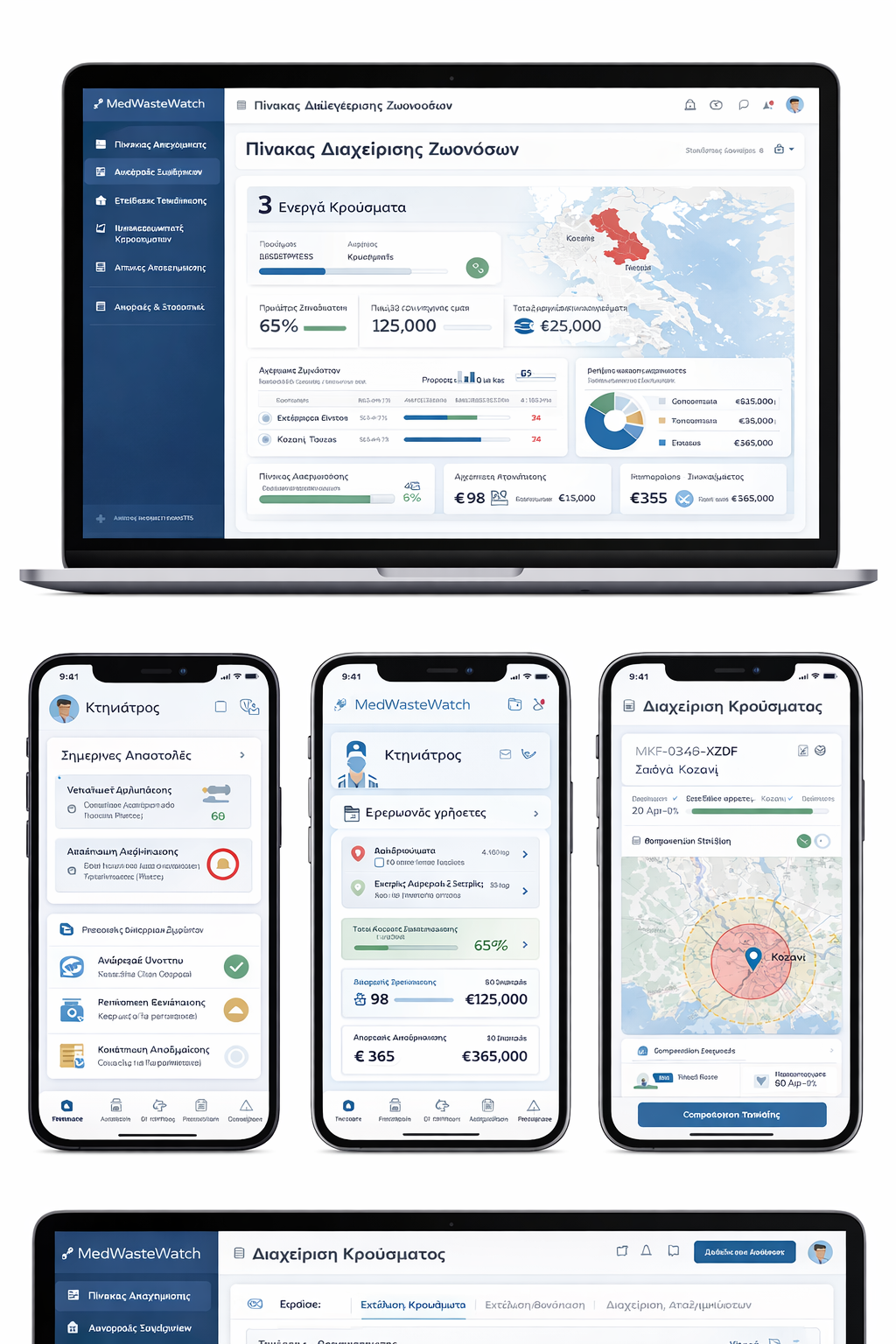
ForMinistriesRegional authoritiesVeterinary servicesLaboratoriesField veterinariansCompensation agencies
The operational challenge
Legislation and data alone cannot guarantee control without a common execution mechanism.
Managing an animal disease outbreak spans multiple authorities, information systems and critical field activities. Delayed information increases the risk of spread, expands control zones and raises public costs.
The critical gap is not a lack of rules. It is the inability to turn them into unified, controlled and auditable digital processes.
The platform
One operational system for the entire incident lifecycle.
The platform connects roles, workflows, data, controls and evidence end to end.
Detection and Reporting
Suspected incident, automated alert, initial record and geographical location.
Sampling
Sample collection, chain of custody and safe delivery to the laboratory.
Laboratory Confirmation
Results, confirmation or rejection linked to the incident.
Epidemiological Investigation
Movement history, contacts, neighboring farms and spatial correlations.
Risk Assessment
Risk score, impact assessment and response level.
Control Measures
Zones, restrictions, biosecurity, disinfection and resource mobilization.
Execution of Measures
Quarantine, slaughter or culling, transport, disposal and field evidence.
Compensation
Submission, validation, calculation, approval and payment.
Reporting and Closure
National and EU reporting, audit trail, lessons learned and closure.
Epidemiological Intelligence Layer
From basic recording to operational intelligence.
AnimalHealthTrace does more than store incidents. It builds a dynamic epidemiological picture linking animal movements, contacts, neighboring holdings, laboratory data and field measures.
- Risk Scoring Assistant
- Contact Network Analysis
- Movement Pattern Analysis
- Zone Escalation Advisor
- Biosecurity Gap Analysis
- Outbreak Forecasting Assistant
Risk indicator72High
Dynamic Livestock Intelligence Layer
Dynamic digital livestock registry and operational livestock overview.
The registry is not a static record. Every operational change updates the real livestock population by holding, area and species.
BirthsDeathsPurchasesSalesMovementsSlaughterDisease-control cullingAdministrative changes
Total animals1.248
Cattle620
Sheep and goats480
Pigs148
National livestock overviewEligibility updatesAdministrative support
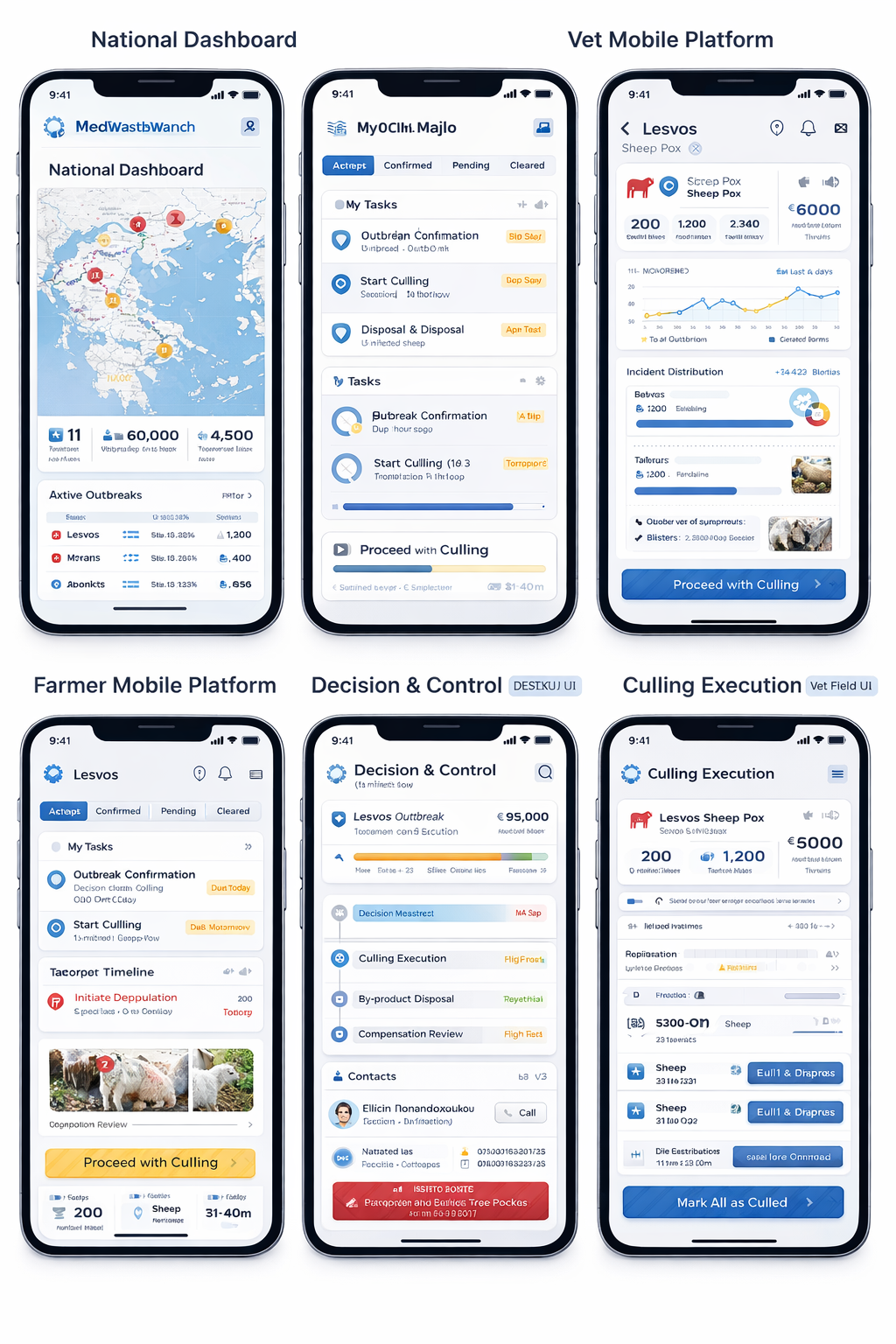
Multi-level operations
Each role works on the same incident with distinct permissions and responsibilities.
- Ministry / Central authorityNational oversight, policy and reporting.
- Region / Veterinary ServiceIncidents, measures and resources.
- Public veterinarianInvestigation, decisions and oversight.
- Field veterinarianMobile execution, GPS, photos and signatures.
- FarmerReporting, updates, obligations and compensation.
- LaboratorySampling, test results and confirmation.
Architecture
Designed as national digital infrastructure, not a standalone app.
Layered architecture for security, interoperability, scalability and continuity.
Application Layer
Incident management, sampling, epidemiological investigation, risk scoring, zones, biosecurity, measures, compensation and reporting.
API Gateway & Security
Authentication, authorization, RBAC, audit logging, rate limiting and data validation.
Data Layer
Relational database, epidemiological graph, GIS/spatial data, document and file storage.
Cache & Queue Layer
Background jobs, alerts, synchronization and resilient processing.
Intelligence Layer
AI-assisted and rule-based analysis of risks, contacts, movements and zones.
Infrastructure
Government cloud, on-premises or hybrid deployment, backups, disaster recovery, monitoring and high availability.
Interoperability
Connects with systems government already uses.
The platform provides an operational integration layer without replacing existing registries and information systems.
National holding registriesLivestock registriesLaboratories / LISAnimal movement systemsCompensation systemsEU Reporting / ADISGIS / Mapping layersAgricultural declaration systems
Field Execution
Compliance is demonstrated at the point of execution.
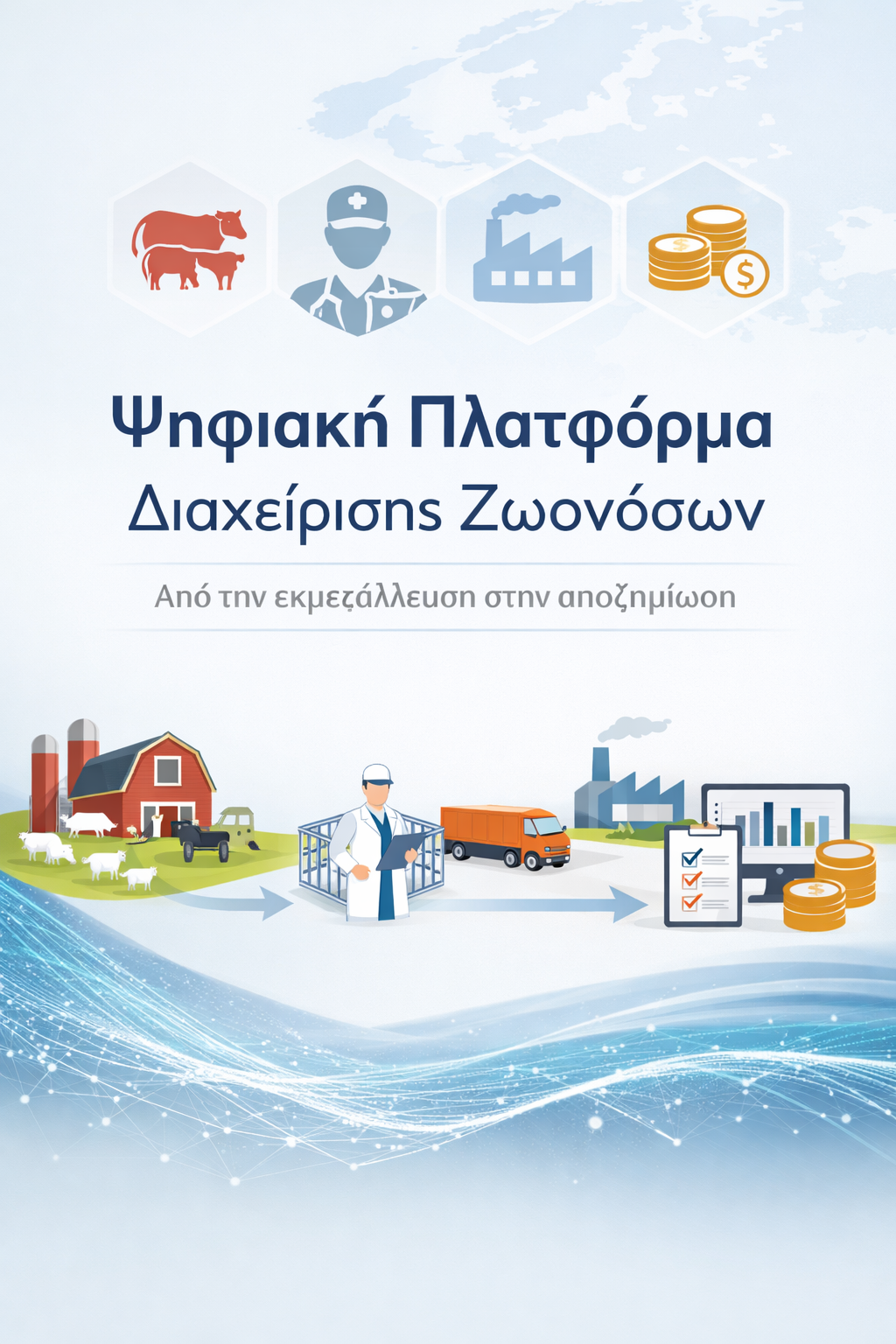
The mobile application guides users, requests the necessary evidence and prevents completion of an action when critical data are missing.
Security and compliance
Every access, decision and change is controlled and auditable.
SSL / TLS
Secure data transmission.
Encryption
Protecting data in transit and at rest.
RBAC
Role- and responsibility-based permissions.
Audit Logs
Full activity traceability.
Retention Policies
Controlled data retention.
GDPR / Public Sector
Designed for public administration and regulatory compliance.
Frequently asked questions
The platform in practice.
A national digital infrastructure for surveillance, epidemiological investigation, risk assessment, execution of measures, traceability, compensation and animal-disease reporting.
It combines epidemiological information, movements, contacts, nearby holdings, laboratory data and policy rules to support response escalation.
A dynamic digital registry updated through births, deaths, purchases, sales, movements, slaughter, disease-control culling and administrative changes.
Yes. Its API architecture integrates registries, laboratories, movement systems, compensation agencies, EU reporting and GIS.
Yes. Mobile workflows can work offline and synchronize once connectivity is restored.
See AnimalHealthTrace in action
Turn animal disease management into a controlled national digital process.
Request a presentation of the architecture, workflows and pilot implementation model.